

Wondering what to do in Belgrade in three days? This 3-day itinerary will help you make the most of your time.
It combines Belgrade’s s main sights and stories with neighborhoods, food, architecture and lifestyle.
Each day follows a route that groups places and themes.
Belgrade in three days at a glance:
- Day 1 – Historic Belgrade: Kalemegdan Fortress and the oldest neighbourhoods
- Day 2 – Serbian Traditions and Creativity
- Day 3 – Socialist Yugoslavia, New Belgrade and the Charm of Zemun
If you’d rather take it easy and simply book a private guide, choose a tour of Belgrade that matches your interests.
I’m Ksenija, a Belgrade-born art historian and licensed tour guide. I’ve crafted this itinerary based on my love for and professional knowledge of Belgrade, also listening to what excites the guests on the private tours I’ve been leading.
Belgrade Day 1 – Big Picture
On your first day in Belgrade, explore its historical centre, for a 8,000-year journey into the cultural history.
- Start with the ancient Belgrade Fortress, also known as Kalemegdan
- Unwind in the elegant and peaceful Kosančićev venac
- Stroll Kralja Petra Street, for its cultural monuments, varied architectural styles and hidden gems
- Discover Europe’s oldest prehistoric cultures Lepenski Vir, Starčevo and Vinča at the National Museum of Serbia
- End the day with live traditional music in 19th century Skadarlija or jazz, blues or DJs in club-packed Cetinjska Street.
See Balkan Border from Belgrade Fortress Kalemegdan

Best time: 10 AM
Tickets: free entry
Best for: history and politics, families
The views from the Belgrade Fortress, show why Belgrade’s strategic location shaped its dramatic history. The rivers Sava and Danube form the border between the Balkans and Central Europe.
The ancient Romans first built the Fortress. All later empires had its hold or eyes on it: the Byzantines, the Ottomans, the Habsburgs, the modern European powers, the US and the USSR.
Why is Belgrade one of the most frequently battled and destroyed cities in history? The answer is the rivalry between the Ottomans and the Habsburgs. Belgrade stood exactly at the border between the two empires. It often changed hands between them, through war. This dramatic history can be traced on the Fortress, all the way to its end in WW1, when both empires ceased to exist. The iconic monument Victor (Pobednik) is a memorial to the Serbian victories over the Ottomans in the Balkan Wars, and over the Austrians in World War I.

If you’d like a deep dive into Belgrade’s history, check out our 90-minute private tour of Belgrade’s Fortress.
Coffee or Lunch in Kosančićev Venac
Best time: around noon
Best for: architecture and style lovers, high-cuisine
After pondering history and politics on the Fortress, slide to the most atmospheric neighborhood of Belgrade, still echoing the elegance of 19th century.
Called Kosančićev Venac, unusually peaceful for a central quarter, it is ideal for a coffee at the terraces of the bars overlooking the Sava river.

If you love high cuisine and fine dining, don’t miss the Langouste restaurant, awarded one Michelin star in 2024. The young chef Marko Đerić had worked in Michelin star restaurants in Italy, Denmark and Switzerland. Marko combines best local ingredients with the most contemporary cuisine. Langouste is open Monday to Saturday, 12 pm to 12 am. Book two days in advance.
Fashion and accessories lovers will want to check out local designer stores Bleyzer and Ana Popović Shoes.
Walk a Mile in Cultures
For the heritage of diverse cultures and a variety of architecture, from Balkanic to brutalism, hit Kralja Petra Street. One of the oldest and most beautiful streets in Belgrade boasts numerous historic landmarks, hiding true gems inside. Look at the plaques on the buildings if you don’t want to miss them!
It is intersecting the much more famous Knez Mihailova, yet it is never that crowded.
To understand the multicultural context of the neighborhood, check out our private tour of this culturally richest mile of Belgrade.

Kralja Petra Street is also a destination for local designers and concept stores, two of Belgrade’s most loved gelato places, and excellent coffee at D59.
If you’re looking for national cuisine and a homey feel, have a meal at Suvobor, where even on a Monday evening tables are full of friends. Suvobor serves breakfast, lunch, and dinner every day.
The neihgbouring Višnjićeva and Jevremova streets offer plenty to see and do, away from the crowds. An 18th-century dervish mausoleum, old homes of Turkish merchants, contemporary art at Zvono gallery, fashion and accessories by local designers from Serbia and Croatia at J25 concept store, natural cosmetics by Koozmetik, ceramics art at Blatobran. For drinks or a meal, step inside Saša bar, a vibrant bistro loved by Belgrade locals.
Discover the Oldest Prehistoric Cultures in Europe
Where: National Museum of Serbia
When: All days except Mondays
Tickets: EUR 3
Best for: archeology, prehistory, ancient history

Prehistory and archaeology lovers, alert! Don’t miss the ground floor of the National Museum of Serbia. The objects of the oldest prehistoric cultures in Europe are displayed and explained here, dating back to 6,300 years BCE.
Discover the first monumental sculptures from Lepenski Vir, the mysterious Redhead Goddess from Starčevo and the alien-like figurines from Vinča, the refined egalitarian culture of artisans and merchants who even developed a kind of alphabet.
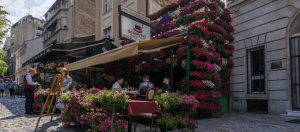
Traditional Food and Music at Skadarlija
Skadarlija became a bit touristy in recent years, yet preserved enough of its authenticity to deserve a visit. The cobbled street still holds the taverns from the 19th century: Tri šešira (Three Hats), Dva jelena (Two Stags) and Zlatni bokal (Golden Pitcher).bett
Skadarlija’s bohemian tradition started with the actors from the nearby National Theatre coming to live here for the neighbourhood’s low rents. A brewery opened in 1850, and many pubs and taverns followed. Actors, poets, intellectuals and bohemians from all walks of life were gathering in Skadarlija, all the way until the late 1990s. The street was irrevocably tagged with the attribute bohemian in 1920, when the entire National Theatre’s ensemble celebrated the premiere of the opera La Boheme at the restaurant Dva Jelena. The artistic crowd moved to other places since, but Skadarlija remains the place where Belgraders take their guests from abroad or celebrate anniversaries.
If you like street food, drop by the old school family-owned bakery Spasa for their speciality bun with goulash, loved by generations of Belgraders.
To learn about Serbian food culture, read our post about our favorite traditional Serbian dishes.
Bar Hop and Dance at Cetinjska
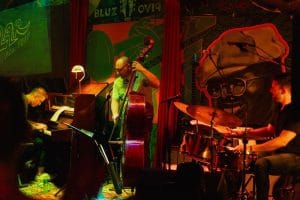
For a contemporary bohemian feel, spend the evening at Cetinjska Street. The string of bars and clubs offers a bustling atmosphere and an excellent selection of DJ sets and jazz and blues bands. You can easily hop from one to another.
Belgrade Day 2 – Serbian Traditions and Creativity
- Visit the impressive Temple of Saint Sava
- Explore its neighbourhood, Vračar
- Hop the stalls of Belgrade’s favorite farmers market, Kalenić
- Walk the elegant Krunska Street with the Museum of Nikola Tesla
- Stroll the central streets Kralja Milana and Terazije, representing Belgrade as the capital of the Kingdoms of Serbia and Yugoslavia
- Discover local designers and concept stores at Belgrade Design District Čumić
Marvel at Splendour of Saint Sava Temple

Where: Vračar neighbourhood
When: All days, 8 AM to 8 PM
Tickets: free entry
For a grandeur of an orthodox church, visit the Temple of Saint Sava. Its white marble facades, enormous dome and 15,000 square meters of gold leaf mosaics are certain to impress. The Temple was constructed in phases (1935 – 1939 and 1985 – 1996, 2001- 2004), as the wars and political circumstances did not allow its completion until 2004.
For a more spiritual feel, closer to the traditional spirit of Serbian Orthodoxy, visit the eponymous little church next to the big one. Almost unnoticed by the tourists, this church is a place of prayer and worship service for the locals from the Vračar neighbourhood. It was built in 1935, when the construction of the Temple of Saint Sava began.
Who was Saint Sava? The most venerated Serbian saint, Sava, was one of the key figures who shaped Serbian identity and culture. The youngest son of the monarch who established the Serbian Medieval state, at a young age, he renounced the dignity and political power of his birthright to become a monk. As an expert theologian, capable diplomat and devoted cultural reformer, Sava brought autonomy to the Serbian Church, created the first laws and spread the spirit and ethics of Christianity to the Serbian court and people.
In the 16th century, as the act of punishment for an uprising of the Serbs who were carrying banners with Saint Sava’s face, the Ottomans burnt the saint’s relics in Belgrade. The tradition has it that the burning happened in Vračar, so it was chosen for the location of the memorial Temple.
Taste Food at Belgrade’s Favorite Farmers Market

Where: Vračar neighbourhood
Best times: 8 AM to 1 PM
Just a 10-minute walk from the Temple of Saint Sava, you get immersed in the vibrant atmosphere of Kalenić farmers market, where you can taste the real local food. On your way, stop by the bakery Čeda, which has been in business since 1948, to try the locals’ favorite breakfast – burek.
Once at Kalenić farmers market, hit the dairy and meat hall for savory sampling of local delicacies: white cheese and kaymak, čvarci and varieties of prosciutto and sausages.
If you’d rather rely on us picking bites, let us take you straight to seven Serbian delicacies from the best stalls.
Belgraders typically get together for a coffee after grocery shopping at the market, so you may want to do the same for people watching and soaking up the local vibe. Check out the cafes in Nevesinjska Street, Moment or Priča in Požarevačka Street or Robusta in Kičevska. The art hotspot of the neighborhood is the Novembar gallery, showing emerging and established Serbian contemporary artists, curated with great attention. Closed on Mondays.
Walk to Tesla Museum
Best times: The guided tours in English run every hour between 10 am and 7 pm (except 1 pm). The latest time slots are the least crowded.
Ticket: EUR 7, cash
From the market, walk one of the streets most coveted by Belgraders, Krunska Street. Shaped by elegant townhouses from the 1930s, it has been a prestigious address ever since, as it starts from the Royal Palace.
The physics and technology lovers will be delighted to visit Nikola Tesla Museum at 51 Krunska Street.

Tesla, who was of Serbian origin, was born in what was Austro-Hungarian territory in the 19th century and had never lived in Serbia. Why is the Tesla Museum in Serbia? After Tesla’s death in New York City in 1943, his heir decided that Tesla’s legacy should belong to the Yugoslav state. The Museum, with the urn with Tesla’s ashes and his personal belongings, including the technical objects he used for his experiments, opened in 1955.
The guided tours in English include simulations of Tesla’s breakthrough inventions, which made having electricity at every home possible and paved the way for wireless transmissions.
Explore Central Belgrade Streets
Continue along Krunska Street to arrive to the Royal Palaces of two Serbia’s rivallng dynasties from the 19th and 20th centuries. Nowadays, the New Court is the seat of the President of the Republic, and the Old Court is the City Hall, so getting inside is not possible.
Sharing the street with the New Court, there is a hidden gem to discover. At no. 8 Andrićev Venac Street, visit the House Museum of Nobel laureate Ivo Andrić.
Here you can see the Nobel medal and diploma, awarded for literature in 1961, and the impressive official uniform of a royal Yugoslavian diplomat, as Andrić was the Ambassador in Berlin in the late 1930s. The Museum is open from 10am to 5pm on all days except Mondays. The ticket costs 200 dinars, which is less than 2 EUR.
Andrić drew his inspiration from the lands and minds of the Balkan peoples. So were the other two great men, geographer Jovan Cvijić and painter Paja Jovanović. You can visit all three house museums on one private guided tour, which includes authentic interiors and sharing insights into the Balkan minds

Across the street from the Royal Courts, drop by U10 gallery, a unique art space run by a group of Belgrade emerging artists who once shared the classroom at Belgrade Fine Arts School. The gallery does not chase art market trends, but boldly lets young and emerging artists from Serbia and abroad be themselves.
Another independent initiative is the Zvezda cinema. The original cinema was built in 1911. The current building was built after WWII and stopped operating in 2007, after the state-owned company that owned several Belgrade cinemas was privatised. In 2014, a group of young filmmakers and activists occupied the empty and deteriorated building, and the movies have been shown ever since. The cinema plays classics, arthouse and cult movies, with subtitles in English. The showings are at 8 pm in autumn and winter, and at 8.30 pm or 9 pm in summer, in the open air. Expect the authentic, worn-down interiors and the audience of true cinema enthusiasts.
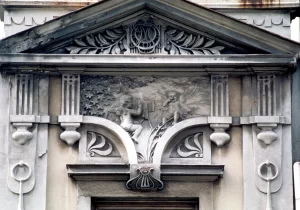
At the same address, you’ll find one of Belgrade’s longest living and most stylish shops. Ercegovac Hats has been making unique headwear since 1927. Step inside and try one of their fascinators, berets, cocktail hats or straw hats.
Shop Local Designers
Continue the walk along Terazije Street, with its elegant facades in neoclassical, Art Nouveau, and Art Deco styles. When you get to the end of Terazije, cross the street via the underpass, and visit Belgrade Design District, the hub of local designers and artists, independent brands and galleries, open from 12 pm on all days except Sundays.

My favorites include All Nut for natural cosmetics made from local plants and fruit seeds, Gallery 1250 for original ceramics by local female ceramics artists, Wunderkammer for prints and vintage, Klasa Klasa for fashion and accessories by young designers, Tara Studio Handmade for hand-made leather bags and Triangle for photographs by an awarded Belgrade photographer Sonja Žugić (who is, by the way, my friend from high school).
On a private tour, we can browse the selected local designers and concept stores in Belgrade together.
Where to eat close to Terazije
For a national cuisine meal, take a 5-minute walk from the Belgrade Design District to Grmeč Restaurant, at 32 Makedonska Street.
Grmeč is the last one standing, from the once notorious Bermuda Triangle of taverns. Close to the building of the Balkans’ oldest newspaper Politika, Radio Belgrade and Atelje 212 theatre, the so-called Bermuda Triangle included three taverns where journalists, writers and actors spent many evenings in engaged conversations.
What happened with the other two? One is now a drugstore, and the other is a polished pizza place.
Grmeč serves breakfast, lunch and dinner from 9 am to 11 pm, on all days except Sundays.
Belgrade Day 3 – Yugoslavia & Zemun
- Explore the unique legacy of Socialist Yugoslavia at its Museum, or
- Through the architecture of New Belgrade
- Treat yourself to a traditional roast at the Belgrade Hippodrome
- Unwind in atmospheric Zemun and its versatile gastronomic offering.
Visit the Museum of Yugoslavia and Tito
Where: Dedinje neighbourhood
When: Tuesday to Sunday, from 10 AM. The guided tours in English run on Saturdays and Sundays at 11 am
Ticket: EUR 7
The Museum of Yugoslavia is a unique museum of a unique state that no longer exists. This is the place to get introduced to Socialist Yugoslavia, the country that challenged the binary assumptions of Western democracy versus Communist dictatorship.

Meet Tito, a charismatic leader respected by the entire world in the turbulent years of WWII and the Cold War. He used to live next to the Museum and he was buried here. You’ll be surprised to see that Tito’s grave looks like the grave of Franklin D. Roosevelt, as Tito wanted itt. The museum displays numerous memorabilia, curated to tell an objective story of Yugoslavia and Tito. Some of them were items of the carefully planned political marketing, like the relay batons handed to Tito by the youth at his every birthday.
Others, like the immense collection of the official gifts Tito was receiving from politicians as diverse as US Presidents, African and Asian postcolonial leaders or USSR heads of state, illustrate the international reputation of Yugoslavia, non-aligning either with US led West or USSR dominated East.
Taste the Famous Serbian roast
If you’re spending a long weekend in Belgrade, treat yourself with the delicious roast. Pig or lamb roast is the star dish of celebrations and festivities in Serbia. The restaurant Uzelac has been the locals’ go-to place for roast for 30 years. In spring and summer, have a table on the restaurant’s terrace with the tranquil views of the greenery of the Belgrade hippodrome.
Open every day.
Explore the Socialist and Brutalist Architecture of New Belgrade
New Belgrade was built after the WW2, as the capital of socialist Yugoslavia. It was intended to host its administrative buildings and the housing blocks for the growing population. The city planning followed the principles of modernism and the specific Yugoslav socialist ideas of a better world.

The public housing blocks were designed to provide economic yet comfortable living, enabling the inhabitants to socialise, practice sports, use social services and shop inside the block. The materialisation of this concept is best seen in Block 23, brutalist in style. The most iconic brutalist gem of New Belgrade is the Genex Tower, the superstar of Belgrade architecture, highly acclaimed in international architecture circles since the late 1970s when it was built. In the last 10 years, it became viral on Instagram, exciting the brutalism fans from here and abroad, being the very reason for visiting Belgrade for some.
Our Unorthodox Socialism – Architecture Tour takes you to five iconic buildings of Yugoslav brutalist and socialist architecture, with a personal commentary from an art historian guide who grew up in a block in New Belgrade in the 1980s.
Feel the Central European Charm of Zemun
For the final part of your Belgrade city break itinerary, once you’ve walked the wide boulevards and the concrete aesthetic of New Belgrade, head to Zemun for a completely different atmosphere.
Zemun still resonates its 18th century Austrian-Hungarian spirit. It was only after WWI that it became Serbian, and only in 1934 did it become a part of Belgrade.
Zemun is much more tranquil than Belgrade and New Belgrade, as it is mainly a residential and restaurant zone, whose inhabitants are proud of their families living there for generations. Soak up this calming vibe by strolling along two or three-storey buildings with elegant facades in historical styles, the charming Zemun farmers market and climbing up the Gardoš tower with fantastic 360-degree views over the entire Zemun and New Belgrade.

Zemun’s gastro offering is not to be missed. If eating at local farmers markets is your thing, choose Koordinata Street, owned by a young couple who believe in farm to table, granny’s kitchen and four seasonal menus or Pretop for a simple yet delicious combination of pork roast, artisan sourdough bread dipped in the roast gravy and champagne.
For fine dining, book at S5 by Angie, where a young woman chef, Anđela, who worked alongside Massimo Bottura, interprets Italian cuisine using the finest Serbian ingredients. If you’d like to eat fish from the Danube River right here on its bank, check out Šaran or Radecki.
If you liked this guide on how to spend three days in Belgrade, write to walking.belgrade@gmail.com to plan your private tour.
The author Ksenija Kastratović is a Belgrade-born and based art historian, a licensed tour guide since 2001.
Find out more about Ksenija and how she designed thematic tours of Belgrade.